Marooned on Mars – Day 3

Day 1 Day 2 — Day 3 — Day 4Day 5

.
Summary:

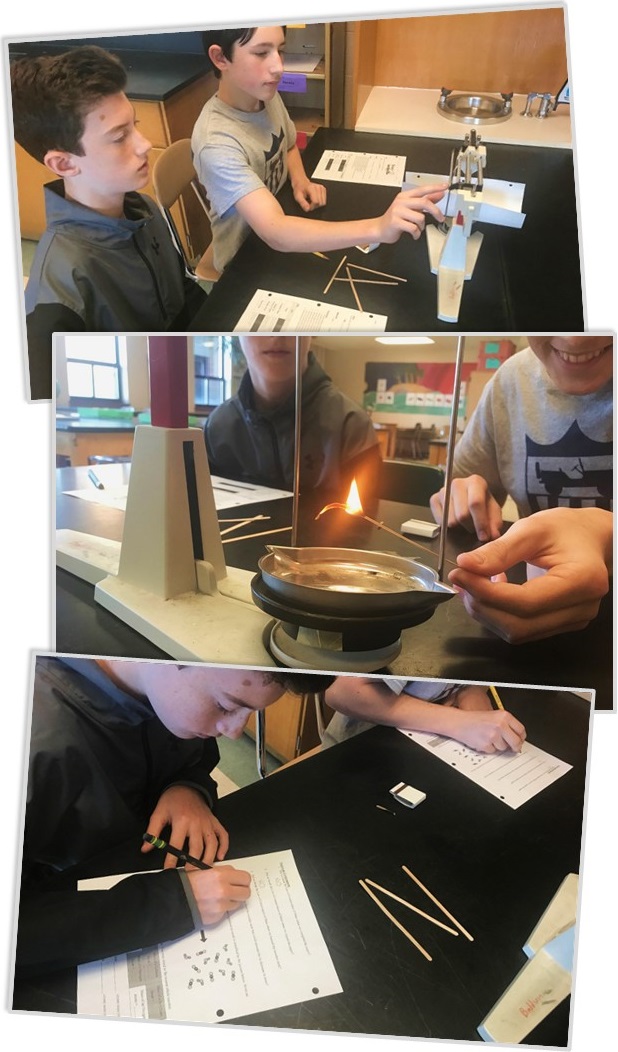
Today was the third day of the project and the second day of students working independently. Most groups tackled the “find a long-term source of oxygen” goal next. And the most popular way of doing this was through the electrolysis of water. By electrocuting H2O molecules, you can split them into hydrogen gas (H2) and oxygen gas (O2). This isn’t some silly experiment; this is exactly how they make oxygen aboard the International Space Station! In reality, you would also need to vent the hydrogen gas outside. But it turns out that one gallon of water can produce about 5 days worth of oxygen. Take a deep breath, Mark Watney, it’s gonna be okay.

Resources:
November 2-7 – Marooned on Mars (pg221).docx

Marooned on Mars – Day 2

Day 1 — Day 2 — Day 3 Day 4Day 5


Summary:

Today was the second day of the Marooned on Mars project, but really the first day of students working. Most group’s decided to tackle the “obtain safe drinking water” goal first. Some groups built homemade water filters, some boiled water to kill germs, and some even made their own charcoal to absorb contaminants. But I think the cleverest solution was the one described in the video above: simply use a phase change. Water is really the only substance that turns into a gas at 212°F, so by boiling the wastewater you can extract clean H2O gas. And then by cooling off the gas, you can condense it back into liquid water! Drink up, Mark Watney.

Resources:
November 2-7 – Marooned on Mars (pg221).docx

Marooned on Mars – Day 1

— Day 1 — Day 2Day 3Day 4 Day 5


Summary:
The capstone project for Unit 2 is called “Marooned on Mars,” and it’s based on the movie The Martian. In the film, astronaut Mark Watney is stranded alone on the planet, and the nearest help is 140 million miles away. The question students will be trying to answer is “What would Mark need to do to survive?” or more specifically “How could chemistry save him?”

Mark is alive and healthy in the solar-powered living quarters, and he is well protected from the elements. So his survival will mostly be a matter of resources. In order to survive until a rescue mission can reach him, there are three basic resources that Mark must obtain: oxygen, water, and food.

Over the course of the project, students will play the role of NASA chemists, instructing Mark on how to solve each of the problems above. Unfortunately their materials are very limited. The mission was only supposed to last 31 days, so they will have to make do with whatever supplies Mark has access to: beakers, funnels, batteries, PH strips, waste-water, matches, sodium carbonate, etc. At the end of the week, students will hand in a lab report that details their instructions. The report must contain materials lists, lab procedures, pictures, and anything else that Mr. Watney might find useful.

Today was simply the introduction. Students took notes on the PowerPoint presentation posted below. Then for the last 15 minutes of class, they took inventory of Mark Watney’s supplies.

Resources:
November 1 – Marooned on Mars Introduction (pg220).pptx
The Chemistry of Food – Day 2

CoFd2

Summary:
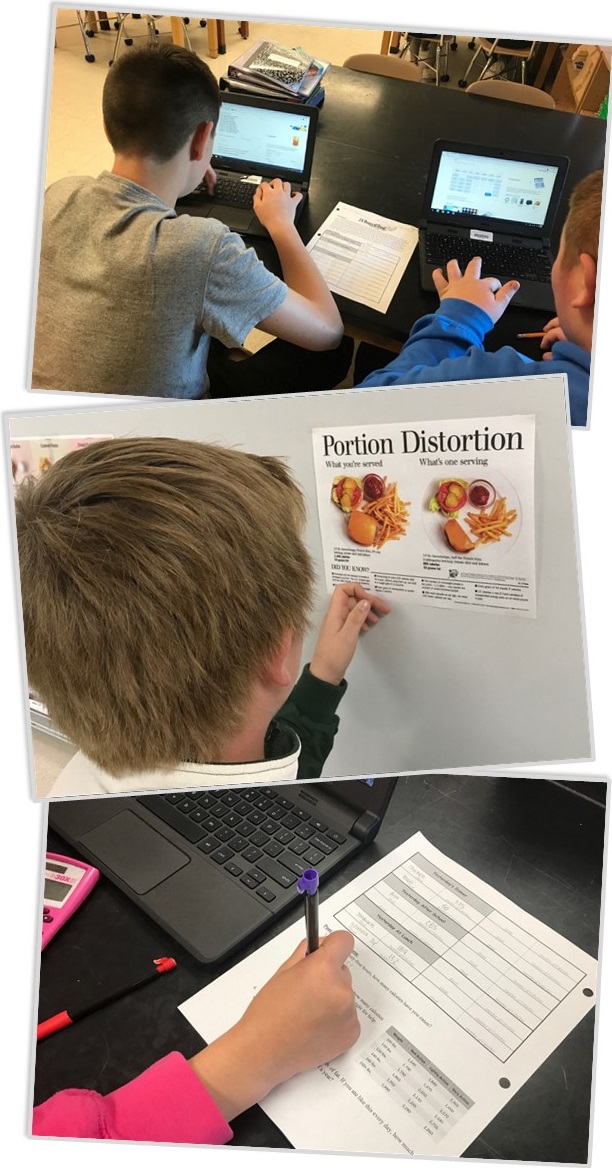
Today we completed an activity called 24 Hours of Food. Students went through the past 24 hours of their diet and listed all of the meals, snacks, and drinks that they consumed. Then they looked up the amount of calories in each item. They added up their total calories consumed and compared it to the amount of calories that they estimated that they burned. From there, they were able to estimate the number of calories lost/gained in the past 24 hours, as well as the amount of body fat that they lost or gained.

Resources:
October 31 – 24 Hours of Food (pg219).docx

The Chemistry of Food – Day 1

This slideshow requires JavaScript.

Summary:
Today we began our final chemistry topic, the chemistry of food. We went through a PowerPoint (posted below) that described how food is digested, what food is made of, and how calories are important. We also included a fun demo where students burned original Pringles and compared them to the reduced fat variety, and also burned Cheetos as compared to Veggie Stix. The difference in calories was obvious.

Resources:
October 30 – The Chemistry of Food (pg218).docx

The Law of Conservation of Mass

locomlab

Summary:
Today we introduced a chemistry topic that we’ve been hinting at all along: The Law of Conservation of Mass. The law basically says “No matter can ever be created or destroyed” and it flew in the face of conventional wisdom that predated modern science. Today we use it to explain everything from rain to boiling water to fire. And the bottom line is you can’t create or destroy an atom; they can only be rearranged. Even more modern topics like nuclear weapons or e=mc2 don’t necessarily break the law.

After discussing all of this with my students, we completed a quick lab activity (posted below) and post-lab assignment. The lesson? You can’t break this law, no matter how hard you try.

Resources:
October 27 – Law of Conservation of Mass (pg217).docx

Where’s the Evidence? – Day 3


Summary:

Today was the final day of the “Where’s the Evidence?” lab. Students did an experiment where they heated sugar in tinfoil trays and then watched the sugar decompose.
sugarandflame
The products of the reaction were charcoal and water. The charcoal appeared as a black residue left behind at the bottom of the tray. The water appeared as steam bubbling out from the warming sugar. This led to interesting conversations about chemical reactions, the four clues, and even the temperature of the resulting water molecules.

Resources:
October 25 – Where’s the Evidence Day 3 (pg215).docx
October 25 – HW Day 3 Post-Lab (pg216).docx