Inside Earth

This slideshow requires JavaScript.

Summary:
We dug a bit further into Unit 6 today (pun mostly intended) in discussing what’s happening inside Earth. Students went through a PowerPoint, which is posted below, that started off with a story of the deepest hole ever dug. The presentation covered the layers of the Earth, the composition of those layers, how convection currents form within the mantle, and what the effects of those currents can be. Of course this includes continental drift, the formation of mountains, and more dangerous effects like volcanoes and earthquakes.

Resources:
March 22 – Inside Earth (pg605).pptx

Convection Lab

.
Summary:

Today students completed our Convection Lab. They filled a tub with tap water; underneath was a sequence of Styrofoam cups filled with hot or cold water. Then they added a small scoop of potassium permanganate (food coloring works too!) above each of the cups. Before long, the water began to move. The difference in temperature caused the formation of convection currents. As the water molecules gained energy, they spread out, becoming less dense and rising to the surface. Then the water cooled off, becoming more dense and sinking back to the bottom of the tub. Convection will be an essential part of Unit 6. It happens in the ocean, in the air, and even underground. Hopefully this lab gives students a solid foundation for understanding all of Earth’s convection systems.

Resources:
March 21 – Convection Lab (pg604).docx

Changes in Density

.
Summary:
Today students investigated how the density of a material can change. When a substance is heated, the atoms and molecules vibrate, which increases the substance’s volume without changing its mass. As a result, its density goes down. When a substance is cooled, the opposite happens, and the density goes up. (Ice crystals are a notable exception this rule.) Today students took part in a lab that tested this effect. They observed how hot water floated because of this change in density. All you needed was some hot water, a pipette, and a bit of food coloring. They repeated the test with cold water and saw the opposite effect. Then they tested salt water. Because salt dissolves in water, filling the spaces between the water molecules, it makes the water heavier without affecting its volume. The result? Salt water has a higher density.

Resources:
March 20 – Changes in Density (pg603).docx

Density Lab

filmstrip

Summary:
Today we reviewed the scientific concept of density. It is basically a measurement of the mass of a material (relative to its volume) and it can be calculated by using the formula “density=mass/volume.” Students measured the mass and calculated the volume of several different objects, always using the units of grams and milliliters. Then they calculated the object’s density and tried to determine whether it would float. Because water has a density of 1 g/ml, there was an easy rule of thumb. If the density is more than 1.0, it sinks; if the density is less than 1.0, it floats. You can find a copy of the lab posted below.

Resources:
March 19 – Density Lab (pg602).docx

Intro to Earth’s Systems

IntrotoES

Summary:
Today was the start of Unit 6, an introduction to Earth’s Systems. We went through a PowerPoint that reviewed the topics of temperature and density. Students should remember density from 6th grade and should remember temperature from Unit 2. But given how just about all of Earth’s systems are governed by these two factors, it was definitely worth reviewing. After that we talked about effects. What happens when you allow temperature and density to run wild across a planet? Of course these effects include everything from tsunamis to clouds to hurricanes.  But I tired to highlight three that will be, for us, particularly relevant during the unit: earthquakes, flooding, and wildfires.

Resources:
March 18 – Intro to Earth’s Systems (pg601).pptx

Unit 5 Test

U5Test

Summary:
We wrapped up our astronomy unit today with the Unit 5 Test. To see a copy, click the link below. The test covered everything from our astronomy myths to seasons and tides to the Lost in Space project. Overall, the scores looked good. Tomorrow we will begin to focus in on the most important planet in the solar system. The only one with liquid water and nachos. Unit 6 is called “Earth’s Systems.”

Resources:
March 16 – Unit 5 Test (pg519).docx

Review Day

Unit5StudyGuide

Summary:
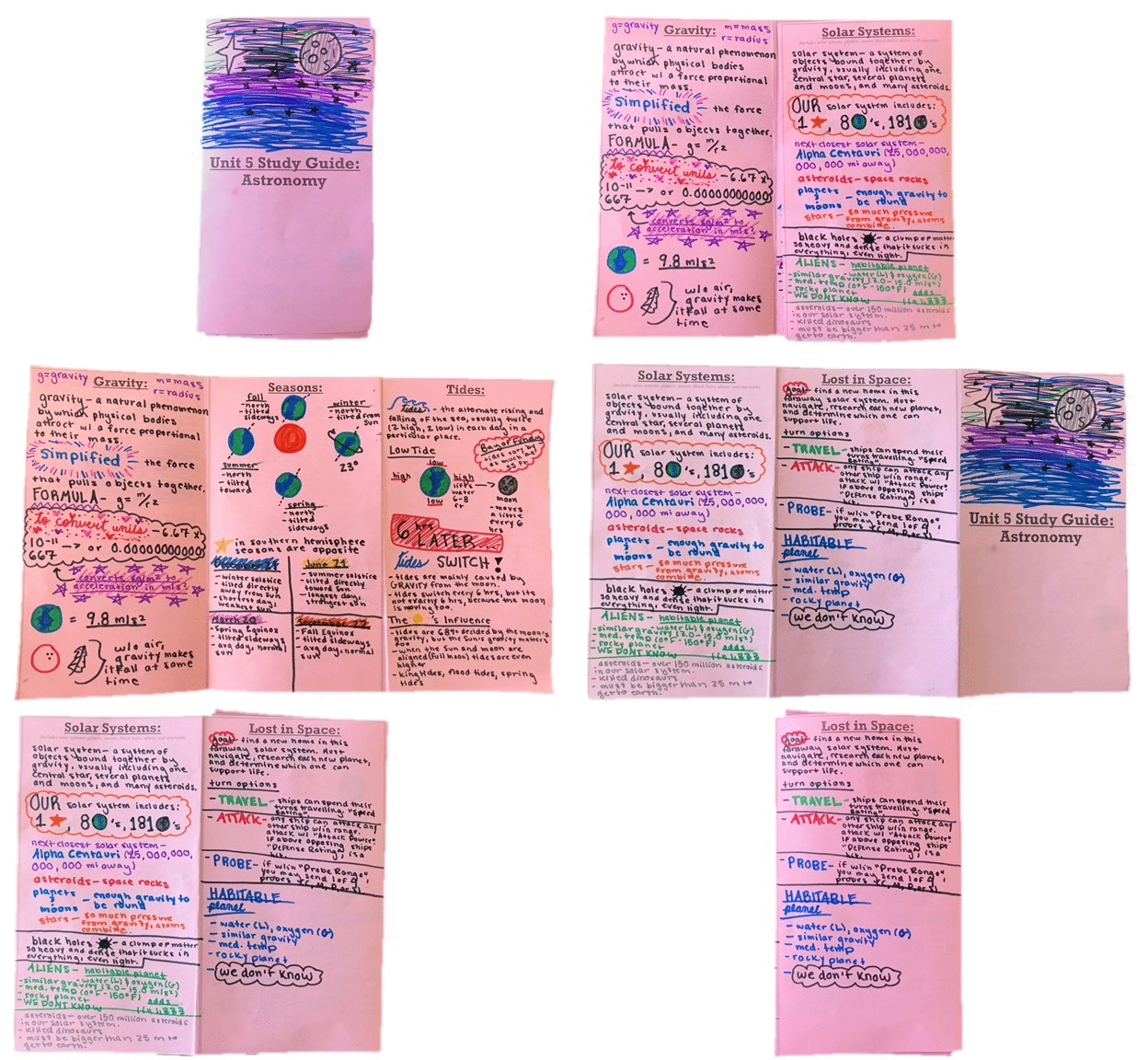
We reviewed today to help prepare for the Unit 5 Test. Students went through their binders and created a study guide, extracting all of the key information that we have covered so far during our study of astronomy. The major topics included gravity, seasons, tides, solar systems, and the Lost in Space project. To download a copy of the study guide, click the link below.

Resources:
March 15 – Unit 5 Study Guide.pptx