Today the entire 8th grade took part in a Climate Science Symposium. Students heard from guest speakers in the fields of geography, oceanography, and physics as they explored the topics of global warming and sea-level rise. After a morning lecture, students were divided into teams and asked to develop solutions specific to towns like Marshfield. Are we better off investing in more sea walls? Should we be prepared to raise coastal buildings and houses? Or should we all move to Montana? There is no easy answer. The main thing that I took away from today’s activities was this: there are always solutions, but they come at a cost.
Waste & Litter
This past August, I began an experiment. Knowing that we would be studying the topic of Waste & Litter in the spring, I decided to bury five objects outside the school. The goal was to examine which of the objects would decompose in a nine month period.
Error
This video doesn’t exist
After today’s lecture on Waste & Litter, students were asked to predict which of the items might have decomposed. Of course, after learning about the invention of plastics and the Great Pacific Garbage Patch, students had an inkling that the results of the experiment might not be all that encouraging.

As it turns out, the buried paper was almost totally decomposed. The grocery bag and plastic water bottle were both perfectly preserved. The napkin was completely decomposed. And the apple core was entirely gone too… except for the sticker. So think twice before you throw that Styrofoam cup out the car window. Future generations will find it just as annoying as you do.
Wind Turbine Testing
Over the past few days, students have been building wind turbines in an attempt to turn moving air into electricity. Wind Power has long been thought of as a solution to the problem of Dirty Energy, but perfecting that solution is no easy task. Some designs are better than others!
Today we finally got around to testing our designs. Each pair of students brought their windmill blades to the front of the class, placed them atop the tower, and hooked up a multimeter (which was used to measure volatage). We then used an electric fan to test their design in low, medium, and high winds.

The winner for the cluster was Nicole Farrell. Her clean, sleek design generated 518 mV of electricity. The conversions are a little messy, as they deal with both voltage and current, but I think a life-size version of Nicole’s design would be powerful enough to power the entire school, at least. Great job, Nicole!
Building Wind Turbines (Day 2)
I apologize for not being in today. I’m sitting here in my pajamas, surrounded by piles of cough drop wrappers; believe me, you didn’t want to be around me today. The instructions I left were for students to complete the following…
Today’s Agenda:
1. Finishing Building Wind Turbines
2. Fill out Wind Turbine Design (on Page 710)
3. Make Wind Turbine Hypotheses (try to predict how other groups’ designs will work) on the back of Page 710
H.W. Checkpoint Quiz (click here)
Building Wind Turbines
Yesterday in class, we discussed the third of our Top 5 Environmental Issues: Dirty Energy. First we looked at the similarities between coal, oil, and natural gas (all fossil fuels that pollute). Then we compared them to three clean alternatives: solar power, hydroelectric, and wind power.
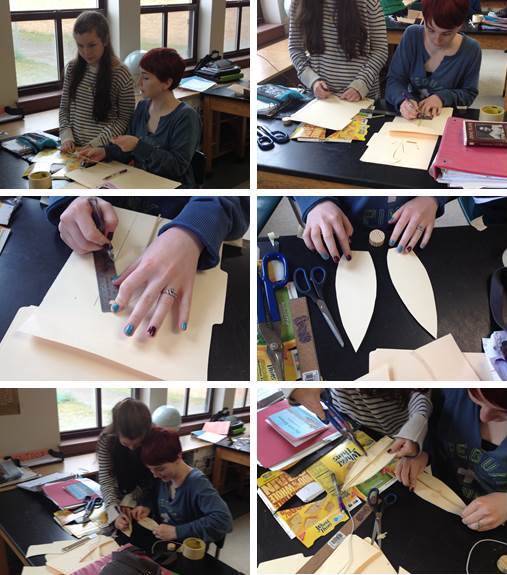
Today, we began a project that will help us understand this last energy source a bit better. Harnessing the wind has been going on since at least the 9th century, but only recently have we begun to use wind to make electricity on a wide scale. In class today, students began a competition where they will attempt to harness the wind and produce electricity. Students paired together and began building a small set of windmill blades that will be hooked up to an electric generator. The group whose design spins the fastest, thereby creating the most energy, will be the winner. Students will finish building their windmills tomorrow, and on Thursday we will conduct our testing.
Dirty Energy
Where does the world get its energy? We use it for our cars, we use it to heat our homes, we use it to make electricity. But where does it come from? Unfortunately, about 90% of our energy comes from dirty, polluting sources. Now the question is, why? Why do we use sources of energy that create cancer-causing sulfur dioxide and release carbon dioxide that warms our planet? Most people would say, “Because it’s cheaper. Powering homes with a coal power plant is cheaper than building a solar farm.” But is it really?
 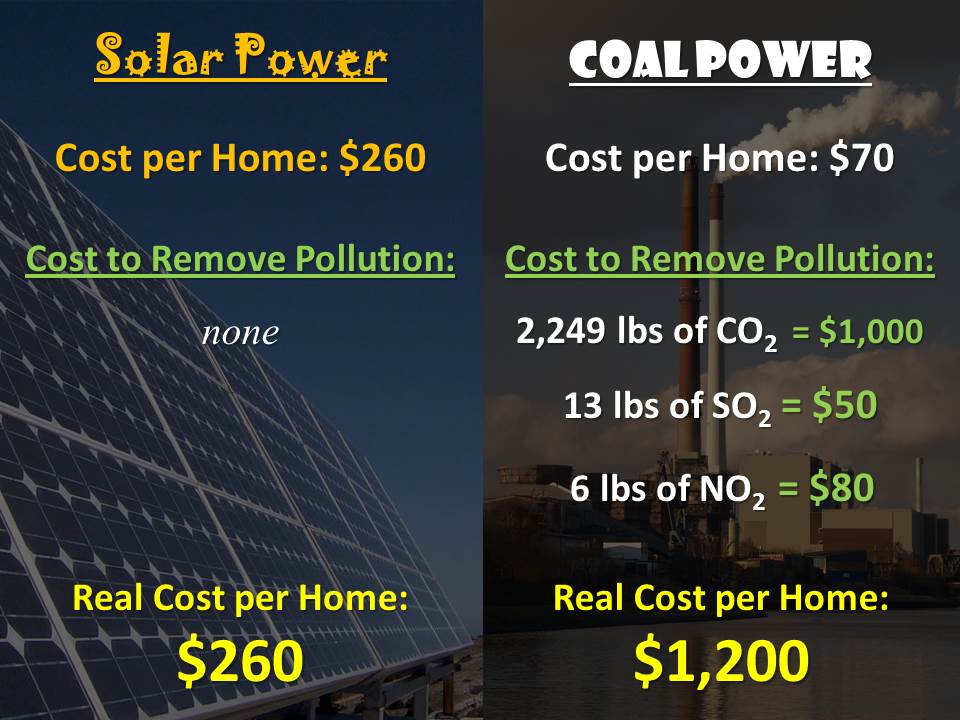 When you look at the cost per megawatt, coal is cheaper. But when you look at the costs including pollution, it’s no contest; solar wins in a landslide. The problem is that pollution is released into the air where it is spread around. And so are the negative effects. Increased cancer risk and global warming affect everyone, while the benefits of cheap electricity go to whoever pays for the power plant. Sound familiar? Dirty Energy is yet another example of the Tragedy of the Commons.
Deforestation Board Game (with Laws)
So how do you solve deforestation? Should we stop using paper? Should we stop building houses made of wood?
Of course, reducing our use of paper and recycling can help. But really this issue comes down to managing the forests better, through the use of something called sustainable forestry. When large patches of forest are clear-cut, they take ages to grow back. But when only small patches are cut down, the soil, the shade, the seeds, and the rest of the ecosystem are preserved. Using this strategy, forests will grow back in 30 or 40 years, rather than 300 or 400.
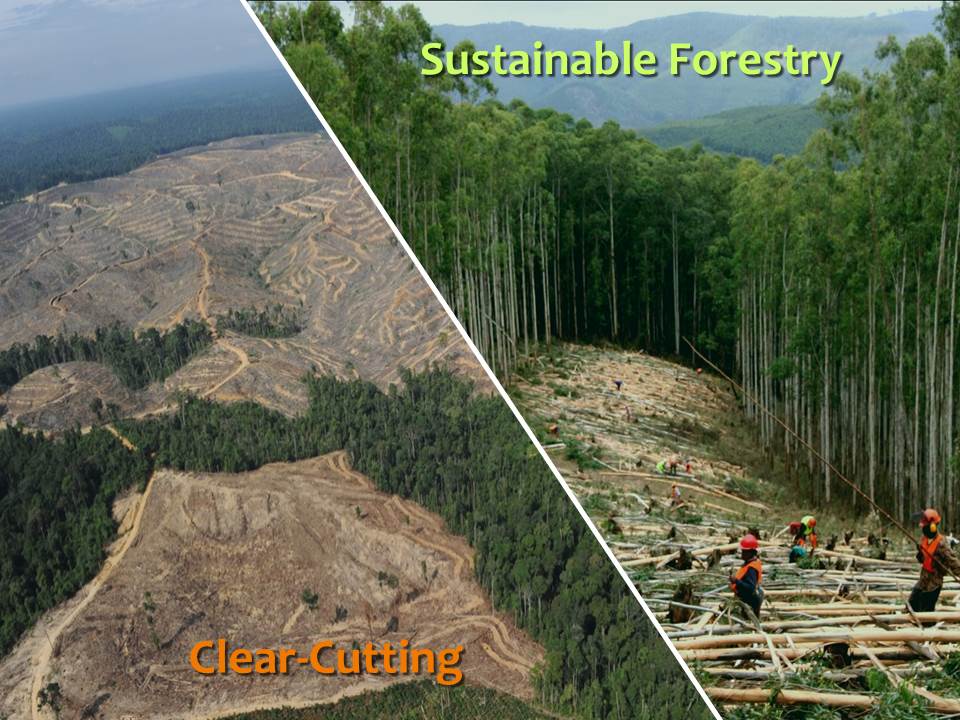
Today in class, students were asked to play the board game again. But this time, they were encouraged to use sustainable forestry practices through the addition of a new law: for every tree that did not grow back by the end of the game, students were fined $175. In most cases, this was all the encouragement they needed. Instead of clearing large swaths of land, students zig-zagged their way across the forests, cutting only small patches and leaving the ecosystem intact.
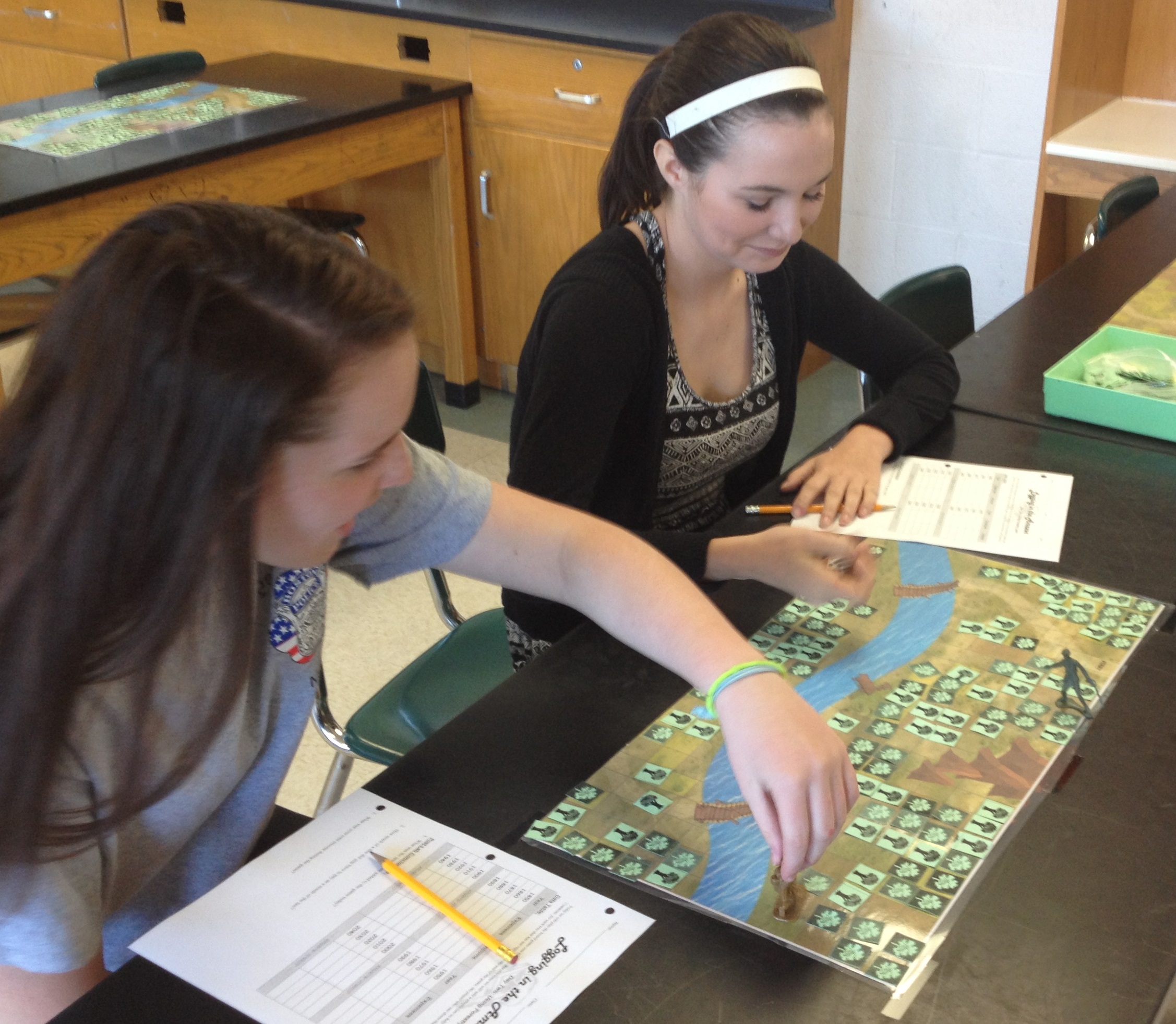
It’s not a perfect solution. Students made a little less profit than they did on Tuesday, and the game moved a bit slower. But the squirrels will thank us, and so will our grandkids.
 www.MrAscience.com