Applying for Jobs

This year we have done projects on boat building, playing doctor, and forensics. We made a book for Columbus and built Martian Landers. And we killed germs with spices and studied Environmental Science. Our science training is complete. So what will we do now that we’ve learned all we can learn? Just like in the real world, it’s now time to find a job.

This week, students will be applying for jobs in one of seven real-world fields. They will be writing resumes and cover letters, applying for the fictional jobs online, and submitting their resumes to real-world experts. The seven selected applicants will recieve prizes on the last day of school. The job postings are listed below:

Naval Engineer
Doctor
Forensic Chemist
Maritime Navigator
Aerospace Engineer
Evolutionary Biologist
Environmental Scientist

An Inconvenient Truth – Day 2

Today we finished watching An Inconvenient Truth. We began the unit with Brown University’s Will Daniels voicing his thoughts on climate change, and we finished by hearing from Al Gore. Students who missed class today can watch the second half of the movie below. The Unit 7 test will be tomorrow (study guides are due also). Good luck to all of you!

A Population Simulation

Throughout human history, our population hovered at anywhere from a few thousand to a few hundred million people. It took us 2+ million years to reach a population of two billion humans. Then, from 1927-2015, in the course of one human lifetime, we went from 2 billion people to 7 billion people!

worldpopulation

So how could a problem like this sneak up on us — as if it were possible for 7 billion people to sneak up on anything! — without us knowing? Of course, the industrial revolution and modern medicine played a huge role, but the answer also lies in mathematics.

Today in class, students took part in a population simulation that modeled exponential growth. They used dice to play the role of reproducing humans; if they rolled a 1, it meant that a person died; if they rolled a 5 or a 6 it meant that a person had a child. Just like in real life, the birth rate was double the death rate. In each generation they rolled one dice for each member of their population. Before long, a population that started with only five members was well into the hundreds. In fact, if this simulation were carried out further, a population of five would reach 7 billion after only eighteen or so generations. I guess we’re going to need some more dice…

photo 3

June 16 – A Population Simulation Lab (pg716)

Overpopulation

According to Dr. Charles Hall, a systems ecologist, “Overpopulation isn’t one of the problems… it’s the only problem.”

bangladeshOverpopulation is the environmental problem that makes all of the other problems worse. Global warming, deforestation, waste & litter… none of these would be problems if there were only a hundred of us living on Earth. But there are more than a hundred; there are 7,250,000,000 of us, as of this morning.

It’s not a matter of if, but when. When will Earth be full? Can it support 9 billion humans or 10 billion? When will we begin to run out of resources? Garrett Hardin touched upon this in his famous essay, The Tragedy of the Commons, saying “Human population will eventually need to stop growing. And when this occurs, what will the situation be for mankind?”

Do we want to live on a planet that’s full, with barely enough food, water, and space to support us? Or instead, should we be forward-thinking and solve the problem now? The choice is ours.

June 15 – Overpopulation Notes (pg714)
June 15 – Unit 7 Study Guide (pg715)

Toxic Waste

We left off on Friday with a lecture on Waste & Litter. In particular, our talk centered around man-made plastics and other materials that were negatively effecting the environment. They clog our rivers, they pollute our oceans, and they look pretty darn ugly… but at least they can’t hurt us, right? Wrong. There is a type of pollution that can hurt us. It’s called toxic waste.

Toxic chemicals are generally produced by factories, automobiles, and other modern technologies. And although laws help us keep these pollutants in check, they have a bad habit of accumulating in our environment.

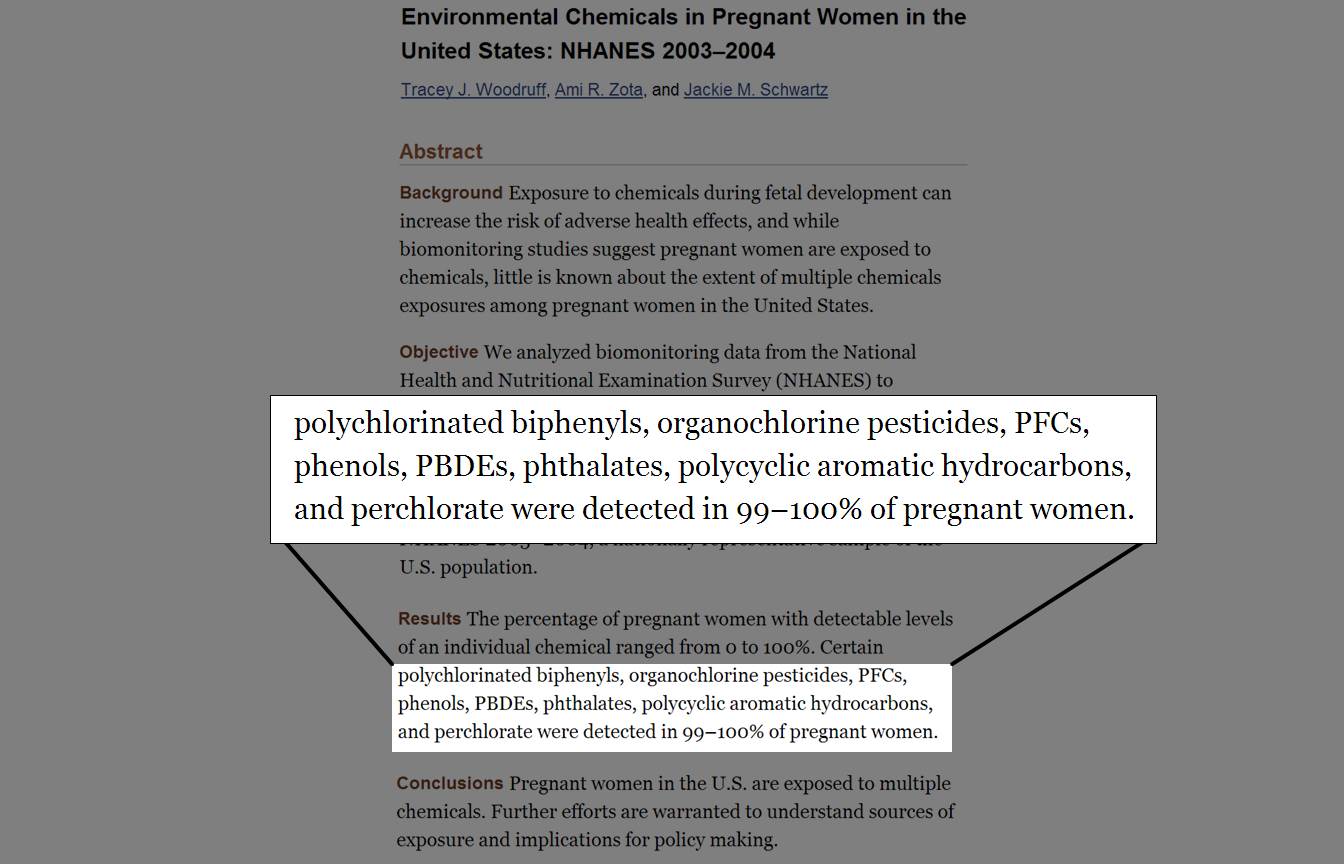
toxic2Meanwhile, cancer rates and the incidence of birth defects have doubled in the past 30 years. This is no coincidence. Recently, a study by Woodruff, Zofa, and Schwartz found toxic chemicals in over 99% of pregnant women.

toxicwasteToxic waste in yet another way that humans are fouling the environment. But it’s not because we’re bad people. Many of today’s pollutants are left over from 50 or 100 years ago, long before we understood their adverse health effects. But change hasn’t come fast enough. Toxic chemicals are still today being produced by factories and automobiles. And that’s what makes environmental education so important. The first step to solving a problem is knowing that there is one.

June 9 – Toxic Waste (pg713)