Playing Doctor: Simulation

Today was the second day of our “Playing Doctor” capstone project. Students took part in a hospital-like simulation where they had to use their knowledge of chemistry to diagnose and treat patients. It was a rigorous, fun, and at-times-stressful day. But the groups in every class did well.

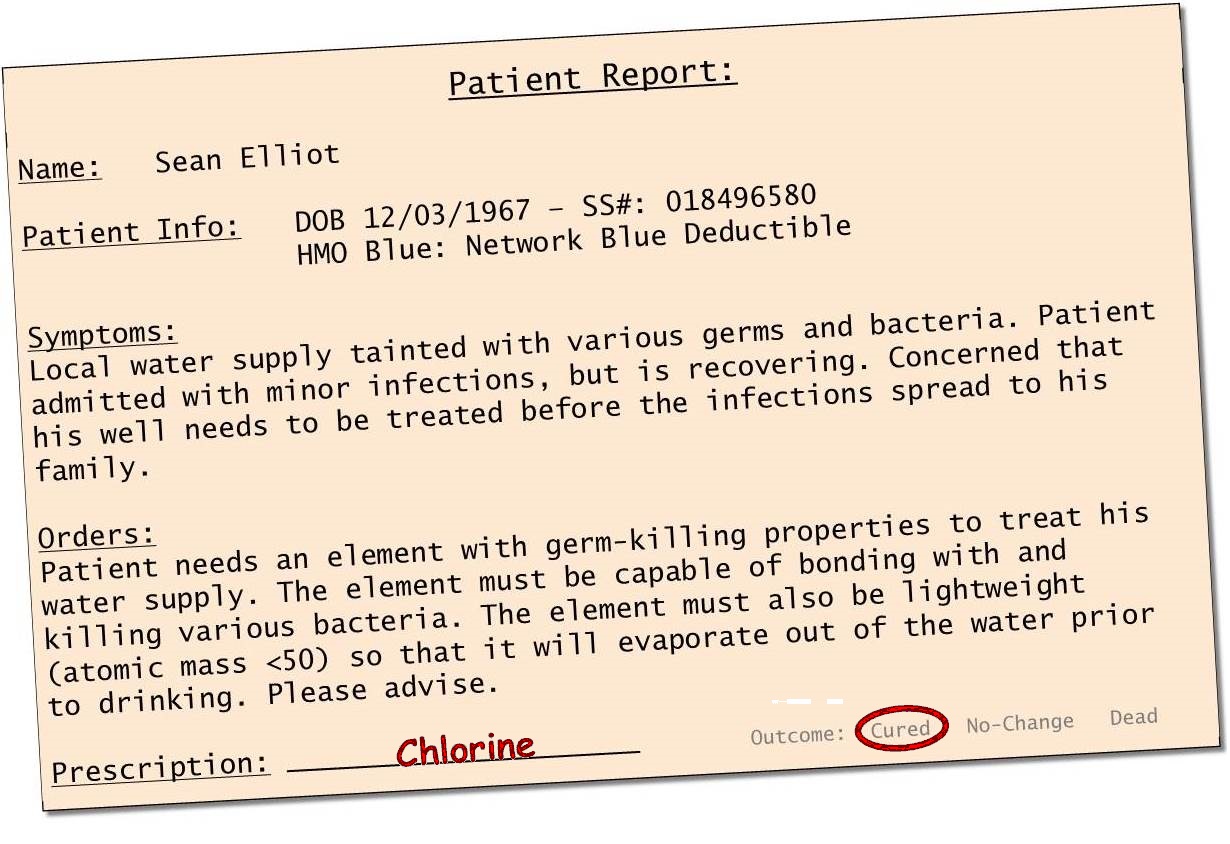
On Thursday, students will get the results of their prescriptions back. Then each team will have to reflect on what happened, analyzing what went right and what went wrong. Their findings will be published in the Medical Report that each group will create. If any students need to review any of the eight patients, their information is below.

Patient Summary – Michael Prozkurski
Patient Summary – Henry Allen
Patient Summary – Austin Jones
Patient Summary – Riley Moeykens
Patient Summary – Helen Shapiro
Patient Summary – John Ferro
Patient Summary – Sarah Clarkson
Patient Summary – Lucas Morrison

Playing Doctor: Introduction

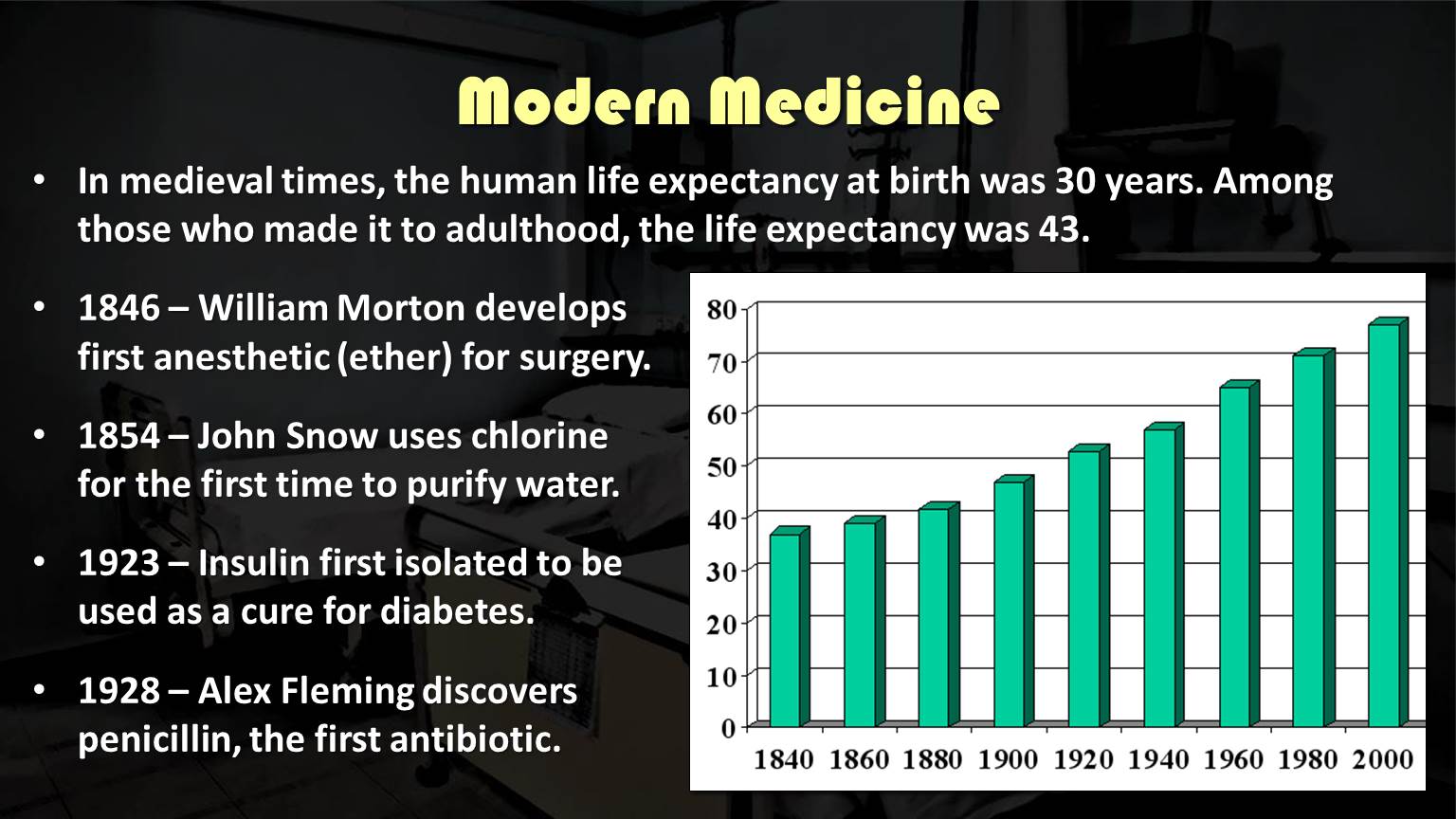
Modern medicine has transformed the way we live, and advancements in chemistry have been a big part of that. Over the past two centuries, the human life expectancy has more than doubled.

3

And the advances are not over. Today scientists are tackling other medical problems, like how to cure cancer, how to test for and prevent genetic disorders, and how to prolong the lives of patients with AIDS. Today, 7 out of every 10 Americans take a prescription drug daily and, on average, we spend $8,200 per year on medical bills.

Our Unit 2 Capstone Project will help students explore the field of medicinal chemistry in a basic yet interesting way. This week, students will divide into teams of two and play the roles of doctors. Patients will be admitted to their small hospitals with various symptoms and they will have to prescribe elements and compounds to cure them.

1

Of course, some of the patients will be cured and others won’t. Such is the life of a doctor. On Thursday and Friday, students will be reflecting on the activity. They will write a Medical Report that details the experiences of their hospital, answering questions like “What went wrong will Mr. Allen’s prescription?” and “Why does chlorine bond with and kill germs?” The report will be due on Monday.

October 26 – Playing Doctor – Notes (pg217)

Elements, Compounds, and Mixtures

The last fundamental topic in Unit 2 is the study of elements, compounds, and mixtures. An element is a type of atom; they are found on the periodic table (ex. iron). A compound is a group of elements bonded together; they have one distinct chemical formula (ex. water – H20). A mixture is a combination of various compounds; it cannot be described by one distinct formula (ex. orange juice).

Today in class students traveled around the room examining seven different substances: water, charcoal, soda, vitamin-C, air, grass, and wood. Using their observational skills and a dash of common sense, they tried to classify each substance as an element, a compound, or a mixture. The results were somewhat surprising.

ECM2

Only one of the substances was a pure element (charcoal). Only two of the substances were compounds (water and vitamin-C). And just like in real life, most of the substances were actually mixtures… even air! Air is composed of several different compounds (CO2, N2, O2, etc.). And that means that, even though you might not be able to see the differences, it is actually a mixture.

October 23 – Elements, Compounds, and Mixtures (pg216)

This weekend’s HW is the Unit 2 Checkpoint Quiz. To take it, please click here. When you finish, your score will automatically be emailed to Mr. A.

Element Dating Game

Over the past few days we have been studying Lewis Dot Structures, Ionic Bonding, and Covalent Bonding. To take it to the next level, we need to be able to look at two elements, draw their dot structures, and decide whether/how they would bond. It can be quite a task!

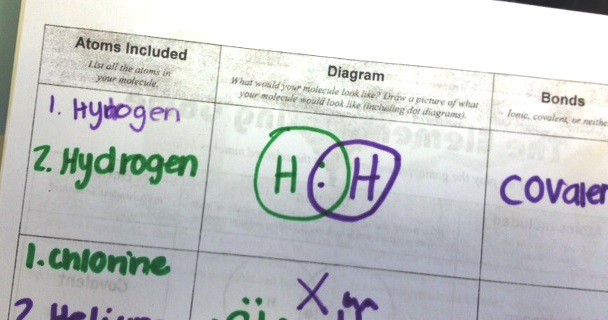
To practice this, we played a game called the Element Dating Game. First, a student was assigned an element (ex. Hydrogen), and then had to interview two other students (ex. Sulfur and Hydrogen) in order to figure out which he could bond with. By asking a series of questions, the first student was able to slowly narrow down his choices. At the end of the game he had to choose which other student he wanted to go out on a date with.

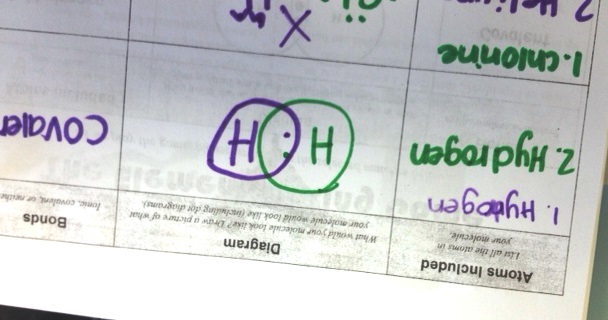
In the video above, Jack made the correct choice. Two hydrogens could indeed join together, sharing two electrons and forming a covalent bond. At the end of the game students had to draw a picture of the resulting molecule, like the one below.

photo

October 22 – The Element Dating Game (pg215)

Covalent Bonding

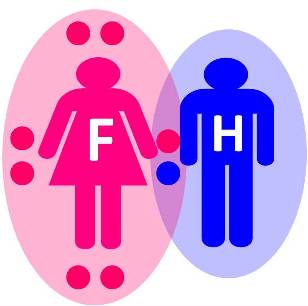
Did you ever hear the story of Fiona Fluorine and Henry Hydrogen?

Henry was a poor boy. He was kind and friendly, but he was sad that he only had one electron. All he wanted was one more to complete his first shell. Fiona was a rich girl, she was the prettiest atom in the whole wide world, but she too needed one more electron to complete her outer shell.

Henry couldn’t give her what she needed. If he gave away his only electron, he would have nothing left. And if Fiona gave Henry an extra electron, she wouldn’t be happy either; her valence shell would be incomplete.

For months they dated other people. There was Nicole Neon, who didn’t like to talk to anyone. There was Arthur Argon who refused to pay for dinner. And there was Cody Cobalt, the lead singer of a heavy metal band. But none of them made Henry or Fiona happy.

One day, Henry stumbled across Fiona crying. She was feeling lonely and depressed. So Henry held out his hand and said to her, “I don’t have much, only one electron. But I’d gladly share it with you.” That was the moment that Fiona and Henry fell in love. They decided to be co-owners of two little baby electrons. And they lived happily ever after.

henryandfiona

It’s not a fairy tale, it’s what happens during covalent bonding. Both atoms need more electrons to complete their valence shells, so they share! Today, in class students practiced drawing diagrams of covalent bonds. For homework, they were given four real-world compounds and they had to figure out whether each compound is covalent or ionic.

October 21 – Covalent Bonding (pg213)
October 21 – HW Real-World Bonding (pg214)
Ionic Bonding

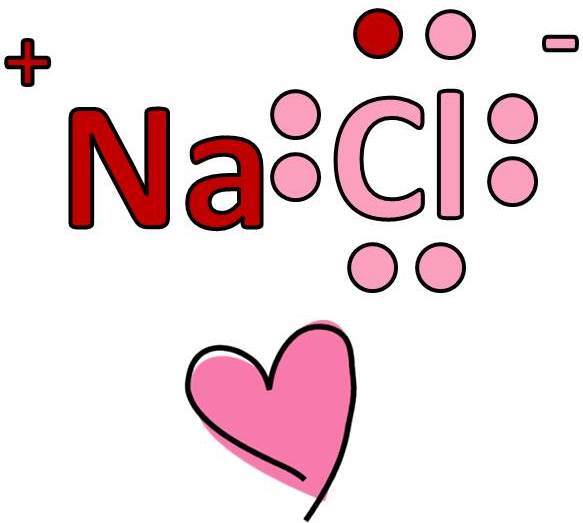
Electrons love having full valence shells. For some elements like sodium, that means they need to lose an electron. For other elements, like chlorine, that means they need to gain an electron.

October 20 - Ionic Bonding

They make a perfect match. When sodium gives an extra electron to chlorine, chlorine becomes negatively charged and sodium becomes positively charged. And opposites attract, so the atoms stick together!

In class today, students practiced pulling random elements out of a box, drawing their dot diagrams, and figuring out whether they would form an ionic bond. For most pairs of elements, it’s just not possible. But for some special combinations, like table salt (NaCl) and sodium fluoride (NaF), it just makes sense.

photo

October 20 – Ionic Bonding (pg212)