Elements, Compounds, & Mixtures Lab

This slideshow requires JavaScript.

Summary:
Today was the last day of our study of elements, compounds, and mixtures. Students rotated through seven different stations and observed seven different substances: washing soda, gallium, grass, sugar, wood, charcoal, and the blue bottle.

At each station, they attempted to classify the substance as an element, a compound, or a mixture. Through observation, or consulting their periodic table, or even reading the box or bottle, most groups were able to classify the majority of the substances. At the end of class we went over the answers (see PowerPoint below).

Resources:
October 13 – Elements, Compounds, and Mixtures (pg205).docx
October 13 – Elements, Compounds, and Mixtures Answers.pptx
How To Make the Blue Bottle (video)

Mixtures

Mixtures

Summary:
Today we discussed the concept of a “mixture” as it relates to chemistry. We defined it as “two or more elements or compounds mixed together, but not not bonded.” A great example would be something like orange juice. Orange juice contains several different compounds (i.e. water, vitamin-C, sugar, etc.) that each retain their own physical properties. As such, you would need several formulas to describe Orange Juice (i.e. H2O, C6H8O6, C12H22O11, etc.)

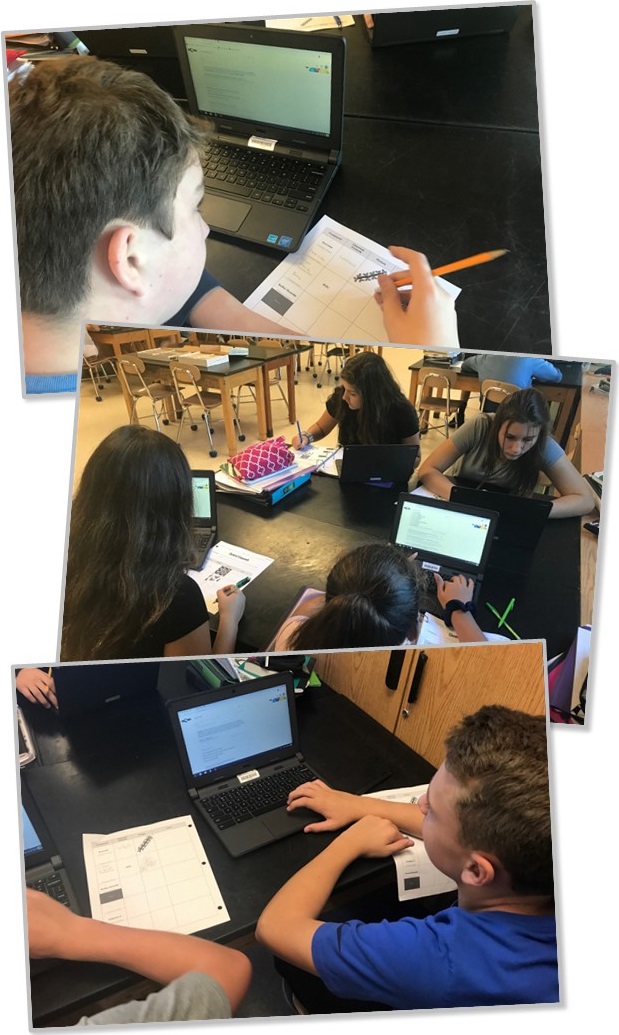
In class, after our discussion, students worked on a packet (posted below) that had them investigate several different mixtures, including air, rocket fuel, and Coca Cola.

Resources:
October 11 – Mixtures (pg204).docx

Compounds

Compounds

Summary:
Today we introduced the idea of a compound, which in chemistry, of course, means “two or more elements bonded together.” We then discussed how these compounds have their own distinct properties, quite different from the individual elements that form them. After that, students spent the class researching nine common compounds that included everything from water to carbon dioxide to formaldehyde.

Resources:
October 10 – Chemical Compounds (pg203).docx

Elements


Summary:

Today we learned about the history of elements through an activity called Mr. Mime (see video above). I had a student read the three paragraphs on Page 202 (below), and then for each fill-in-the-blank, I acted out the correct word. I think those three paragraphs do a pretty good job at summarizing the history of early chemistry.

After that, students filled out the rest of Page 202. They started by reviewing some definitions, and finished with a word-scramble type activity on the back. All of this should have been a review of material from 7th grade.

Resources:
October 6 – Periodic Table (pg201).docx
October 6 – Elements (pg202).docx

Intro to Chemistry


Summary:
We began today by introducing our chemistry unit. I was absent today, so this had to be done via video (see above). I tried to discuss what chemistry was and why it is important to study. Specifically, I mentioned how important chemistry has been in relation to modern medicine, how it can be used by police or the FBI, and how it has been used by NASA to make things like rocket fuel.

After the video, students completed their first “Take 5” test corrections. They reflected on yesterday’s test and tried to figure out their mistakes using the worksheet posted below.

Resources:
October 5 – Take 5s.pptx


Review Day

Trashketball

Summary:
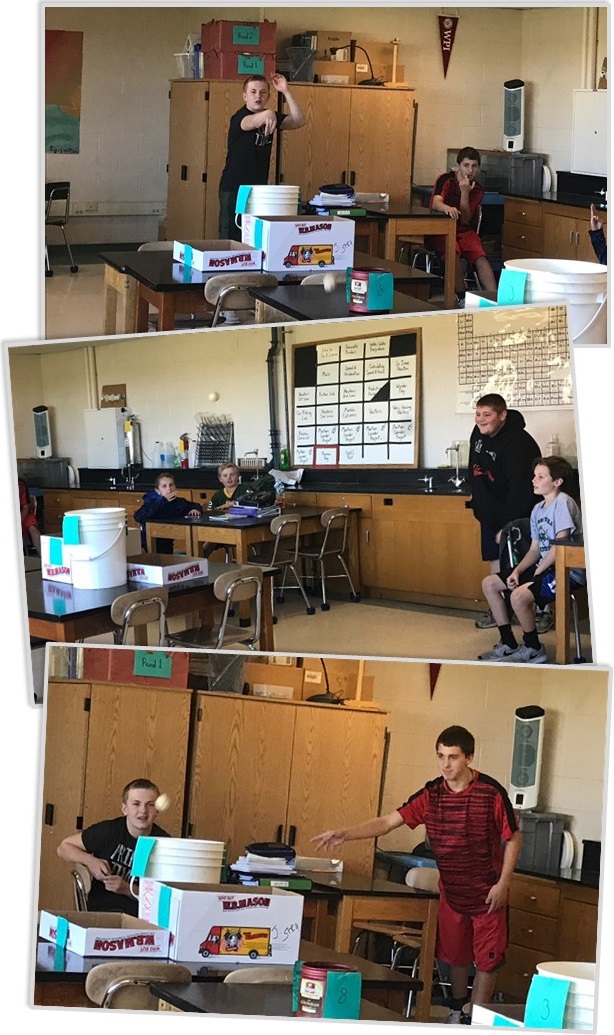
We spent today reviewing for our Unit 1 Test. And we played one of my favorite review games: trashketball. The rules are simple. Call on two students to stand up and ask them a review question. If they get the answer right, they earn a shot at the trashcan, or recycle bin, or whatever you decide to use. For some added fun, you can make different trashcans worth different amounts of points. We will follow up with the Unit 1 Test tomorrow.

Resources:
None