Science MCAS – Day 1

Students took part in the first day of the science MCAS this morning. The test covered the 6th, 7th, and 8th grade science curriculum, as well as Tech Ed, Computers, and Health. And they wonder why only 39% of Massachusetts passed the test last year!

Oh well. We’ll do our best. After the test, students in my Hydrogen, Helium, and Lithium classes were diagnosed with TBS (Tired Brain Syndrome). So the classes took part in outdoor lessons that included a nature walk, as well as students trying to examine the modern evolution of Dandelions.

The second half of the Science MCAS is tomorrow. Sleep tight, everyone.

The Candy Fishing Lab

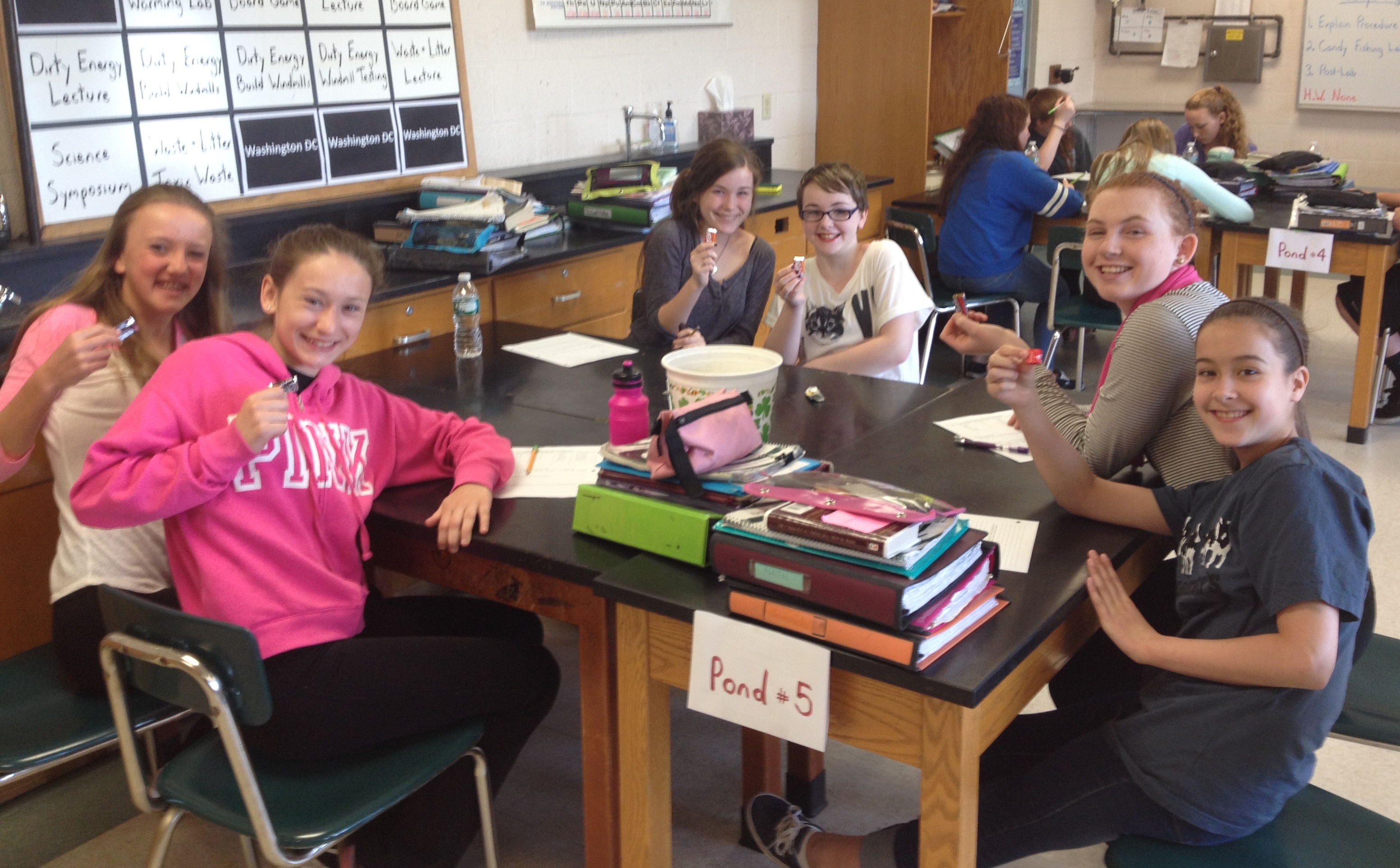
Today in class, students took part in The Candy Fishing Lab. The goal was simple: survive until the end of the game so you get to eat your candy. But accomplishing that goal was not so simple.

photo 2

Each round students would walk up to their group’s “fish pond” and take a few “fish”(candy). What they didn’t know was that their pond worked just like one in nature; the more fish they took, the fewer were left behind to reproduce. On the first attempt, most groups fished their ponds to extinction. No fish for you!

However, after they were educated about how the fish reproduce, most groups got it right the second time around. Taking just one fish each day, students were able to survive while allowing the fish in their pond to repopulate. Needless to say, there were a lot more smiling faces afterward.

IMG_1007

The lesson was clear, using resources sustainably requires education and teamwork. This lesson can also be applied to real-world problems like overfishing, littering, and deforestation.

May 15 – Candy Fishing Lab (pg702)

Intro to Environmental Science

660x332

“When are we ever gonna use this stuff?” That’s a common question teachers hear from students. We make you learn Algebra; if you become an engineer you might use it, but you probably won’t. We make you learn chemistry; if you become a doctor you might use it, but you probably won’t. It’s too bad there isn’t some subject we could teach you that you’d all use, one that’s really important for everyone to know about…

There is! It’s called Environmental Science. Over the next seven weeks we’ll be learning the science of the planet we live on, the most important science of all. In particular, we will be focusing on the following five issues:

1. Global Warming
2. Deforestation
3. Dirty Energy
4. Waste & Litter
5. Overpopulation

But first we’ll be taking a page out of Garrett Hardin’s book (almost literally) and learning about why all of these problems occur. Buckle up. Friday’s lesson is the most important lesson of the year.

May 14 – Unit 7 Vocabulary (pg701)