Today we continued the movie Apollo 13. If you were absent, please watch the second part of the movie by playing the video above.
Apollo 13 (Day 1)
Today we watched the first part of the movie Apollo 13, the true story of an American space disaster that happened back in 1970. Not only is the movie a great combination of history and science, covering many of the topics that have discussed in Units 4 & 5, it’s also quite a nice break from the daily routine. If you were absent, you can watch the first of the three parts by playing the video above. I hope you enjoy it!
Unit 5 Test
Today we officially finished Unit 5. I checked off the students’ study guides and then they took the Unit 5 Test. Overall, the scored looked good. Great job, everyone!
Review Carousel
Today students completed a Review Carousel to prepare for tomorrow’s test. If you’d like to review the questions, please click the link below. Also, remember that the Unit 5 Study Guide is due tomorrow. If you have any questions when you are studying tonight, please email me (namendolare@mpsd.org)!
A.P.O.D.
Today was the final lesson in Unit 5, which gave students a chance to look at a fun and fascinating resource: NASA’s Astronomy Picture of the Day website.
Students were asked to choose five of their favorite pictures on the website, draw a picture, and then try to classify them. This assignment will be checked on Monday.
After that, some students began work on the Unit 5 Study Guide which will be due on Tuesday, the day of the Unit 5 test. Have a great weekend, everyone!
Finish Solar System Diagrams
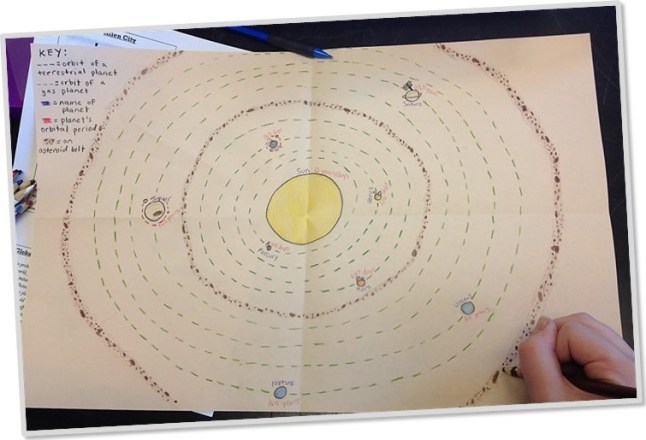
Today students worked on their Solar System Diagrams. They finished their drawings, decided on locations for the five alien installations. And, if they had time, they added details like the asteroid belt and the Oort cloud. Any diagrams that were not finished in class must be finished for homework!
Begin Solar System Diagrams
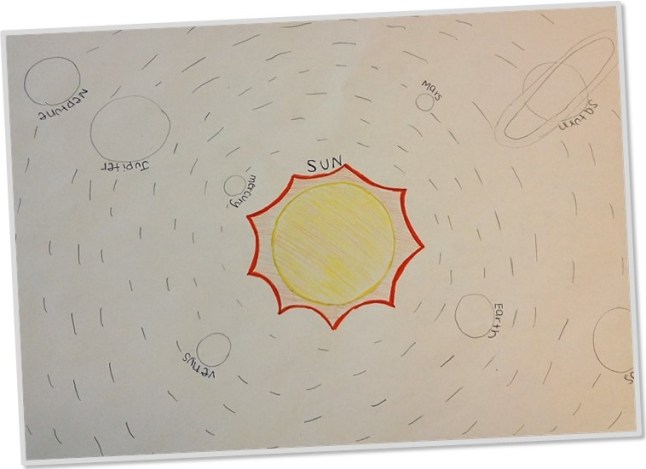
Today students began to organize all of their research from Alien Invasion Week by making a solar system diagram. The premise of the project is that this diagram would be sent back home to their alien leaders and must describe the solar system in detail. Not only does the diagram need to show proper sizes, locations, and orbits of the eight planets, it also has a real-world element. Students will recommend locations for an alien city, a military outpost, an orbital mine, a solar telescope, and a global warming research lab. Only one of these is allowed per planet.
 www.MrAscience.com